Depending on your condition and severity, we will customize a specific treatment plan for you.
At DISC, we offer more services than your typical chiropractic office. When it comes to your health, we don’t take any risks, and we want to offer the best solution. All treatment is rendered by licensed health professionals with extensive training. Click the images below to learn more about our in-house treatment options.


Chiropractic Adjustments
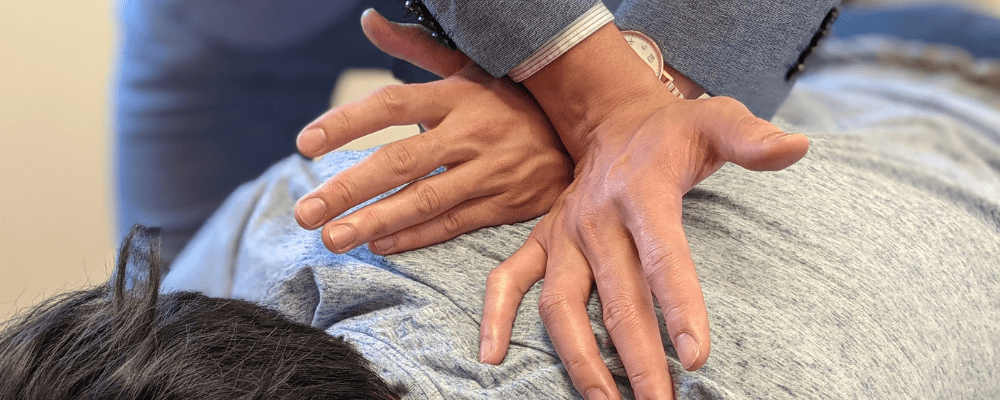
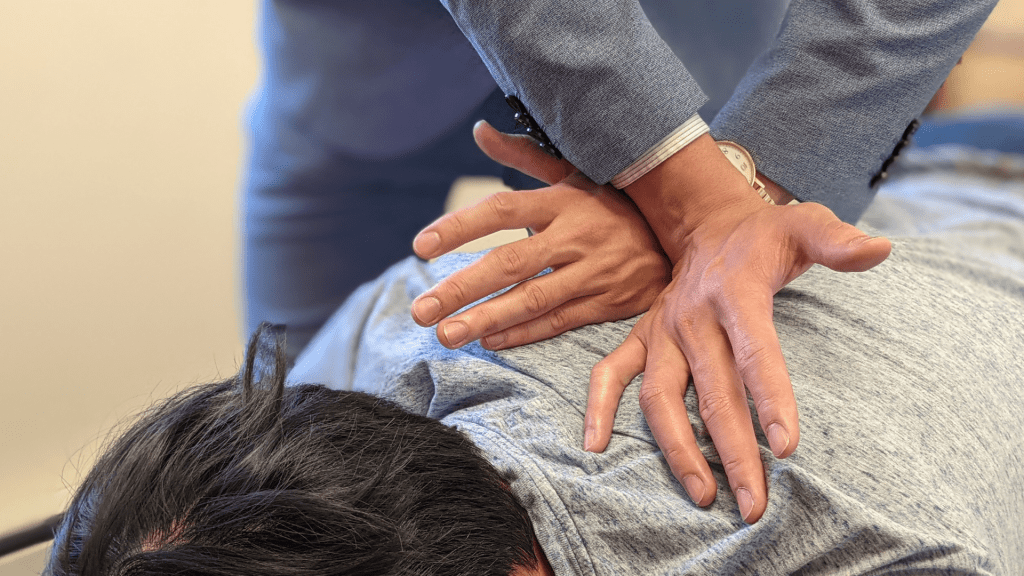
Chiropractic adjustment (or manipulation) is a procedure involving the doctor’s hands or a small instrument to deliver a controlled, sudden force to a joint. These adjustments can be performed on the spine and all the extremity joints, including the hips, knees, feet, shoulder, elbows, wrist, ribs, and jaw joint. The goal of the adjustment is to improve spinal motion and decrease pain.
During the adjustment, you may be placed into specific positions to treat the affected areas. The adjustment is very gentle and an external force is applied by the chiropractor to push the joint beyond its usual range of motion. It is normal to hear cracking or popping sounds in the joint, which means the joint has been released and gapped.
Dr. Shiau is well-trained in multiple adjusting techniques, depending on the patient’s needs and conditions. If you are not a candidate for high velocity adjustments, instrument- adjusting may be a possible treatment. As medical technology advances, so do chiropractic techniques. Instrument adjusting delivers a specific gentle force and serves as an extension of the chiropractor’s hands.
Manual manipulation of the spine and other joints in the body have dated to as early as 2700 B.C. Ancient writings from China and Greece mention spinal manipulation to treat low back pain. Evidence of manual manipulation of the body has been well-documented among the ancient civilizations of Egypt, Babylon, Syria, Japan, Mayans, and Native Americans.
Acupuncture & Dry-Needling
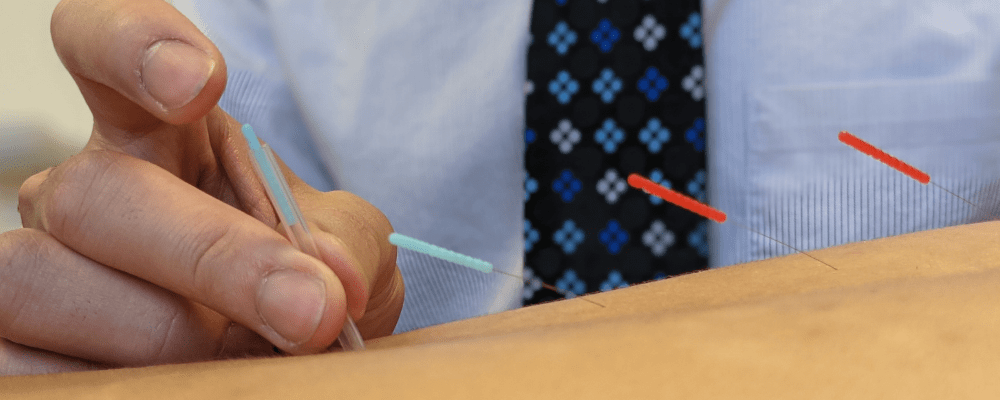
Acupuncture involves the insertion of very thin sterile needles through your skin at strategic trigger points on your body. The needles when inserted into specific acupuncture points will stimulate nerves, muscles, and connective tissue, as well as boost your body’s natural painkillers.
Originating from traditional Chinese medicine, acupuncture is most commonly used to treat pain, improving overall wellness, and reducing stress management and fatigue. These needles help restore energy flow and re-balance your body’s systems.
Traditional Chinese medicine explains acupuncture as a technique for balancing the flow of energy or life force (chi) believed to flow through pathways, or meridians in your body.
Soft Tissue Therapy
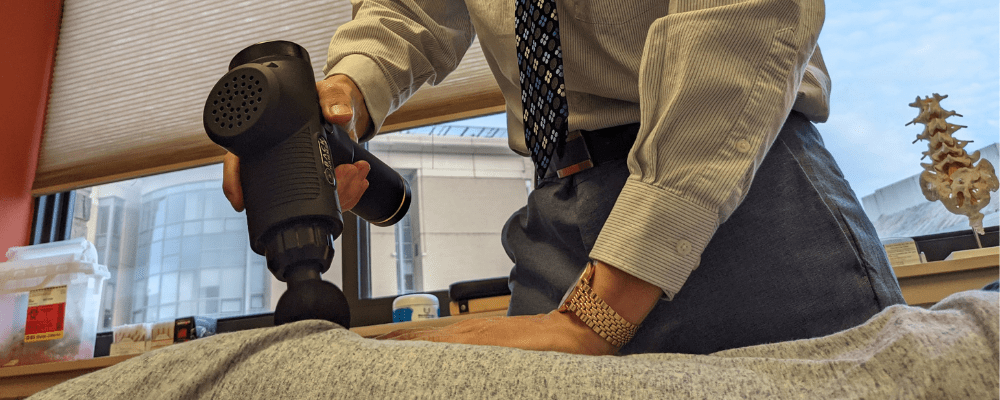
Dr. Shiau focuses specifically on soft tissue structures in addition to his regular adjustments. Soft tissue stiffness, soreness, and aches may attribute to your pain and immobility. Through soft tissue work like Active Release Therapy or Instrument-Assisted Soft Tissue Mobilization (IASTM), manual pressure and specific stretching techniques are applied to the problematic tissues.
IASTM is a technique using medical-grade stainless steel instruments that have beveled treatment edges and contours that can conform to different body anatomical locations and allows for deeper penetration. It is used for the detection and treatment of soft tissue disorders.
Soft-tissue mobilization produces a neurophysiological effect as it stimulates mechanosensitive neurons and pain-perceiving nociceptors through skin deformation by the instrument.
Studies have addressed the benefits of IASTM at the cellular level. The inflammatory response initiated through micro trauma to the affected tissues results in increased fibroblast proliferation, collagen synthesis, maturation and the remodeling of the unorganized collagen fiber matrix following IASTM application. This is why the treatment site appears red and bruised, which is the result of increased blood circulation, the breakdown of scar tissues, adhesions and facial restrictions.
Physical Rehabilitation
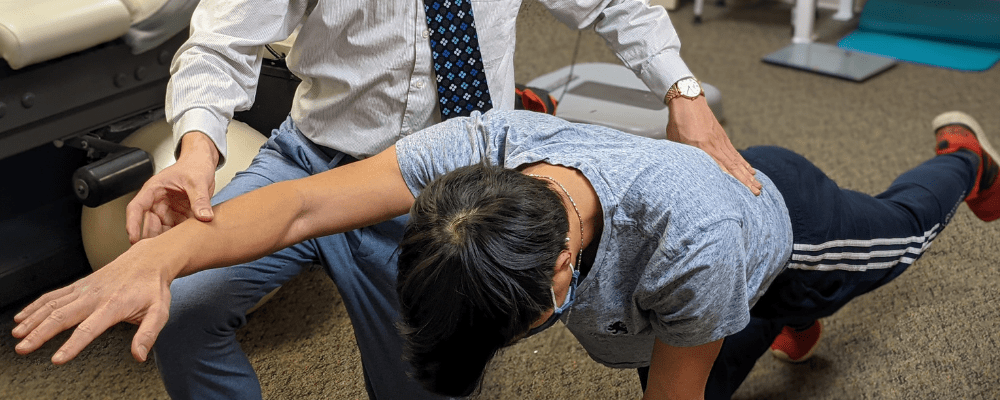
A key element to recovery is your active physical therapy. You will be prescribed a specific strengthening and stretching regimen based on your condition. This rehabilitation will help improve your pain, prevent muscle deterioration, promote healthy motion and strength, and protect against new or recurring injuries. Therapeutic exercises are essential to prevent scar tissue from forming which leads to lost motion. Even after you have fully recovered from your injury, it’s vital you maintain your tissues’ flexibility by continuing with your prescribed regiment.
Spinal Disc Decompression

Traction and non-surgical spinal decompression helps distract specific regions of the spine. This treatment gently separates the vertebrae resulting in disc decompression, reduced nerve root pressure, and less pain.
A specific instrument and table will create a negative pressure inside the involved disc, allowing it to absorb fluid and nutrients in order to facilitate healing and decrease inflammation. This non-surgical procedure is aimed at treating disc bulges, herniations, and degenerative disc disease in the neck and lumbar spine. The treatment is very gentle and you will experience several cycles of stretch and relaxation, which progresses to a deeper decompression over a period of several minutes.
Spinal decompression and traction is best for pinched nerves, sciatica, shooting radiating pain into the arms or legs, spinal arthritis and degeneration, spinal stenosis, neck or low back pain, or postoperative complications.
Y-Axis Traction
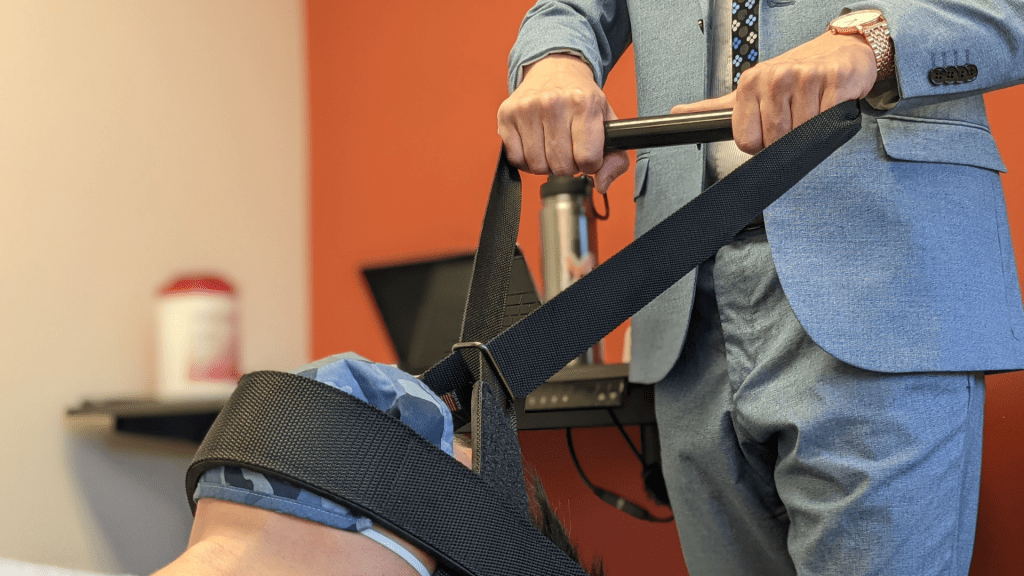
Y-axis traction (also known as Y-Strap) is a non-surgical manual spinal decompression treatment. It is a Pettibon Technique, which Dr. Shiau had extensive training in during his time at Palmer College. Decompression of the cervical spine allows pressure to be released from the intervertebral discs and spinal nerves. The head rests comfortably on the padded strap while spinal traction reduces nerve pressure and decompresses the spine, also relaxing the muscles. This type of traction allows joints and muscles to recuperate their natural tone.
Other Therapies

Electrotherapy
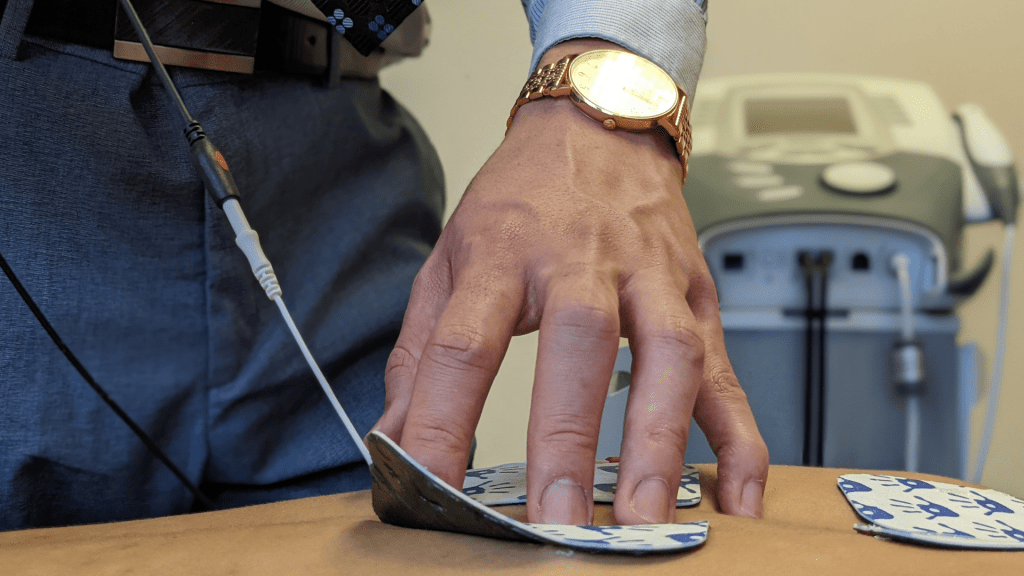
Electrical Muscle Stimulation (EMS) uses a light electrical current to cause a single muscle or a group of muscles to contract. By placing electrodes on the skin in various locations to recruit the appropriate muscle fibers, this allows the electrical pulses to block the pain signals traveling from your injured body to your brain.
Along with increasing muscle function, the contraction of the muscle also promotes blood flow to the area that assists in healing. EMS will decrease muscular spasm by artificially tiring your muscle in spasm, allowing it to relax.
Cupping
Special cups create a vacuum suction in specific locations of the body to increase blood flow and reduce pain and deep tissue inflammation within the body. Cupping produces improved mobility and decreased muscle soreness.
Taping
Kinesio-taping over the injured site allows for improved muscle awareness by providing different feedback from local receptors of the injured tissue, which causes increased awareness of the weakened muscle. Taping allows for pain relief by modulating the body’s receptors under the elastic tape, and decreased inflammation by creating a microscopic separation of the skin and fascia. It is a very effective and popular treatment among pro-athletes and Olympians.
Moist Heat Therapy
Therapeutic soothing application is very effective at treating exercise-induced delayed onset muscle soreness and reduce pain. The moist heat helps calm muscle spasms and stiffness of joints by promoting blood flow and accelerating healing. Moist heat penetrates deep tissue faster than dry heat, therefore its more efficacious at reducing tissue damage and promoting pain relief.
Call or click below to schedule your consultation. We offer SAME DAY & Saturday appointments.
Clinic Hours
- Monday
- 8:30 am – 7:00 pm
- Tuesday
- 10:00 am – 7:00 pm
- Wednesday
- 10:00 am – 7:00 pm
- Thursday
- 10:00 am – 7:00 pm
- Friday
- 8:30 am – 7:00 pm
- Saturday
- 9:00 am – 3:00 pm
- Sunday
- Closed
Clinic Location
501 School St SW, Suite 210, Washington, DC 20024
Located 1-minute off L’Enfant Plaza Metro Station with street parking or parking garage below
Contact Us
(202) 599-9069 (call or text)
Fax: 1-202-217-4338
Staff@districtinjury.com
Follow us on social media @SpineDocShiau
 DISC• District Injury & Spine Center• The premier clinic in the Washington, DC DMV metro area